CMHA Seeks 216 Affordable Apartments at Closed Garver YMCA Site
The YMCA agreed to sell its closed 1827 Livingston Ave. branch to CMHA, which is asking a Columbus area commission to back 216 income-restricted apartments.
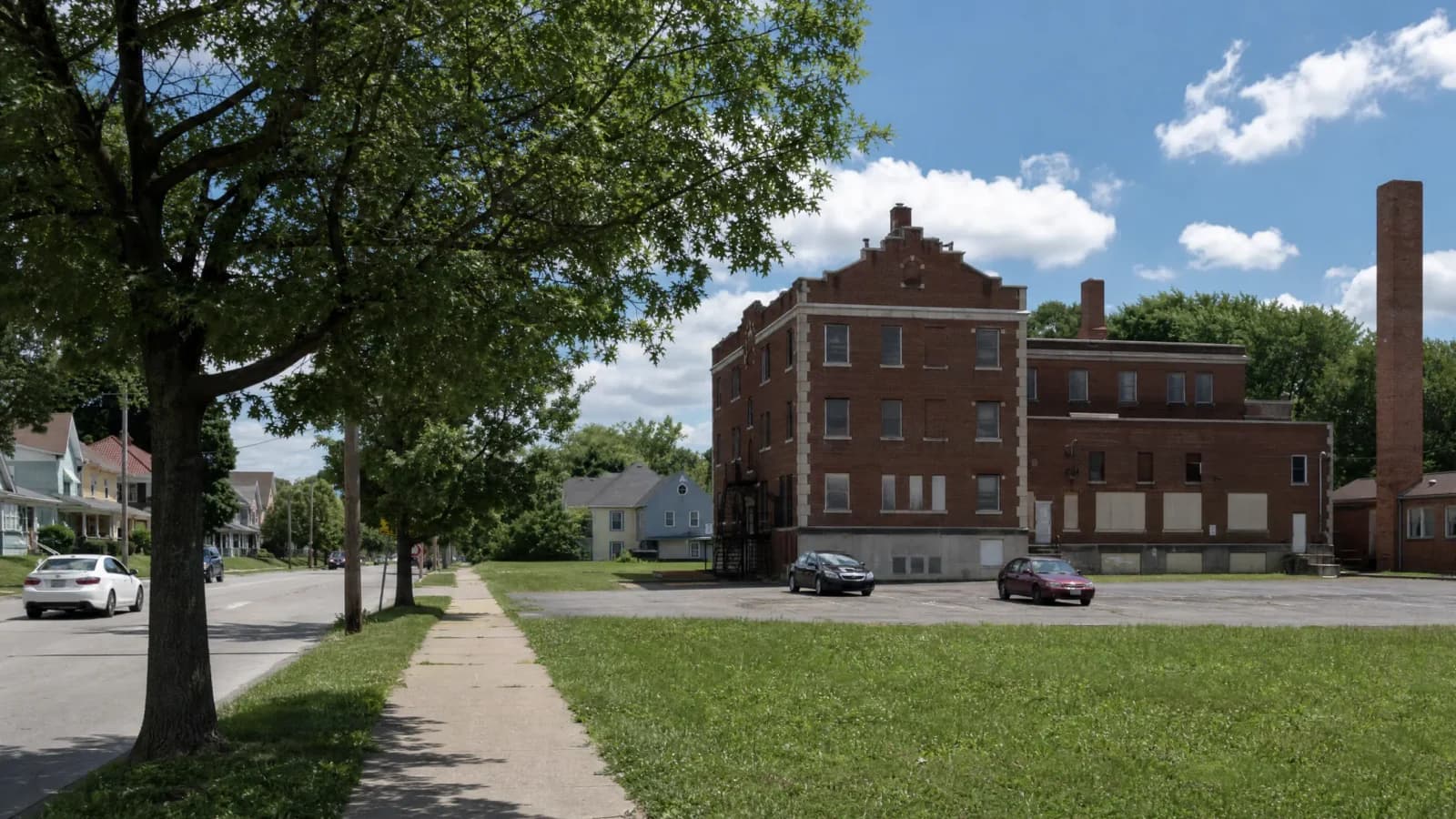
The YMCA of Central Ohio has agreed to sell the closed Garver YMCA at 1827 Livingston Ave. to the Columbus Metropolitan Housing Authority. CMHA has since asked a Columbus area commission to support 216 income-restricted apartments on the roughly nine-acre southeast side property.
What the YMCA Agreed To, and What It Did Not
The Y is precise about the stage this deal has reached. Its Jerry L. Garver YMCA closure FAQ says the branch would permanently close on Saturday, May 30, 2026, and that the YMCA "has agreed to sell the property to the Columbus Metropolitan Housing Authority, building on a long-standing partnership." The Y adds that it is selling the site to CMHA "so the site can continue serving the community in a meaningful way." An agreement to sell is not a recorded transfer. The Y publishes no closing date and no price, and CREN could not check the parcel record because the Franklin County Auditor's property search was offline for maintenance on September 4.
The same FAQ gives the reason for the closure without softening it. The building could no longer be run sustainably, it says, because of "ongoing facility limitations, declining usage, and operational challenges."
A Branch Cut From a 10-Year Plan
The closure was not a one-off. A YMCA of Central Ohio release in February set out a 10-year plan to reshape the organization's footprint and reach more than half a million people by 2035, and it named Garver as the branch that would close. President and CEO Tony Collins framed the trade-off this way: "Every decision we make, no matter how complex or difficult, is grounded in responsibility and care." 614NOW reported that the branch opened in 1996 and served the southeast side for three decades.
The 216-Unit Plan CMHA Took to an Area Commission
By June, CMHA had a plan concrete enough to present in public. NBC4 reported that the authority proposed 216 affordable apartments on the roughly nine-acre site, in nine three-story walk-up buildings with a clubhouse and a pool, for households earning 70 to 76 percent of the area median income. CMHA also asked for variances covering building height, building setback, parking spaces, and first-floor residential units.
The Greater South East Area Commission did not settle it that night. NBC4 reported the vote was tabled to a July 15 committee meeting. Commission member Mark Harper put the case for the housing broadly, saying Columbus and central Ohio are facing a housing crisis like most of the country. Neighbor Jaimie Zydorczyk was unconvinced, telling NBC4 the complex "doesn't really fit that area."
Who These Apartments Would Be For
That income band is workforce housing rather than deep subsidy. A household in it usually earns too much for the programs aimed at the lowest incomes and too little to absorb what new market-rate buildings in Columbus charge. Rents in an income-restricted building are set against a published income limit instead of against what the market will bear, which is what makes them predictable.
One thing the June presentation did not settle, at least in the account NBC4 published, is whether the units would carry project-based vouchers. That detail decides whether a resident with a deeper subsidy need can live in the same building.
What the Neighborhood Lost First
Before any of this, Garver was the recreation anchor on this stretch of Livingston Avenue. When it closed, residents told NBC4 they had nothing comparable nearby. Lois Maier, who took exercise classes there, said she would now be traveling to Whitehall or Reynoldsburg. Mark Harper, from the same area commission that later reviewed CMHA's plan, said of the decision: "We have not been included in any of those conversations." The city's Recreation and Parks Department told NBC4 the building had significant water damage that made repairs financially irresponsible for the city to take on.
Where CMHA's Money Has Been Going
CMHA is in an unusually active building period, which is the context for taking on a nine-acre site. WSYX reported that in August 2025 the authority approved more than $100 million in housing investments, including 220 units at The Falls on Refugee Road, a $14.3 million acquisition of Demorest Townhomes in Grove City, and a $26 million purchase of the 244-unit Rosebrook Village in Reynoldsburg, backed by up to $64.3 million in tax-free municipal bonds. The Falls is also on the southeast side, so Garver would not be the authority's only bet in this quadrant.
Three Records to Watch
A recorded deed at the Franklin County Auditor would confirm the sale actually closed, and at what price. A decision on the variance requests would show whether the buildings can be built at the height, setback, and parking counts CMHA asked for. A financing announcement would show how it gets paid for. Until those exist, this is an agreement and a proposal, not a project under construction. Our affordable housing coverage tracks the same milestones on other Columbus sites.
Stay Informed
Get the Columbus RE Insider newsletter — market data, neighborhood analysis, and investment insights delivered every Tuesday.
Subscribe Free